
Undergraduate Major
PROPOSED Bachelor of Science in Healthcare Science
Alvernia University's Bachelor of Science in Healthcare Science is a flexible, career-focused degree designed for students who want options. Whether preparing for healthcare careers, graduate education, healthcare leadership, public health, informatics, or emerging healthcare professions, students build a personalized pathway through scientific study, experiential learning, professional development, healthcare technology, and purposeful service.
Guided by Alvernia's mission to Learn, Love, and Serve, graduates leave prepared to lead, adapt, and thrive in an evolving healthcare landscape
What You'll Learn
Explore Health. Design Your Pathway.
- Scientific foundations of health, wellness, disease, and human development across the lifespan
- Healthcare systems, policy, leadership, and population health
- Health communication, advocacy, and cultural responsiveness
- Evidence-based practice, research literacy, and critical thinking
- Healthcare informatics, data analytics, and artificial intelligence applications
- Professional development, career exploration, and experiential learning
Why Healthcare Science?
Healthcare Science is designed for students who want flexibility while preparing for healthcare careers, graduate education, leadership opportunities, and emerging professions.
Students customize their degree through:
- Minors, certificates, badges, and electives
- Internships and experiential learning
- Faculty mentoring and career advising
- Graduate and professional school preparation
- Professional networking and leadership experiences
One Degree. Multiple Pathways.
Students customize Healthcare Science to support careers and graduate education in:
- Healthcare Leadership & Administration
- Community & Population Health
- Patient Advocacy & Care Coordination
- Healthcare Informatics & Data Analytics
- Healthcare Communication & Education
- Healthcare Operations & Practice Management
- Healthcare Consulting & Business Development
- Professional & Graduate Healthcare Programs
Fast-Growing Profession
Develop Leadership Skills for a Growing Healthcare Industry
The healthcare industry continues to experience strong workforce demand across clinical, administrative, community, and leadership settings. The BS in Healthcare Science helps students develop the knowledge and skills needed to advance within the healthcare field through coursework in healthcare leadership, population health, healthcare systems, quality improvement, and advocacy.
Program Outcomes
Healthcare Science students develop seven core competencies that prepare them for healthcare careers, graduate education, leadership opportunities, and lifelong professional growth. While all students complete a common core curriculum, each student can strengthen these competencies through strategic selection of electives, minors, certificates, badges, internships, service experiences, and pathway-specific coursework.
Explore each outcome below to learn how Healthcare Science students develop these competencies and customize their educational experience.
- Outcome 1: Scientific and Healthcare Foundations
Apply biological, behavioral, social, and population health sciences to understand health, wellness, disease, and healthcare needs across the lifespan. Students integrate foundational scientific knowledge to support healthcare career exploration, graduate study preparation, and evidence-informed practice.
Pathway Options:
- Biology
- Biochemistry
- Exercise Science
- Sports Nutrition
- Pathophysiology
- Gerontology
- DPT Preparation Pathways
- MSOT Preparation Pathways
- Additional Healthcare Provider Pathways
- Outcome 2: Evidence, Data, Informatics, and Artificial Intelligence
Critically evaluate scientific evidence, healthcare data, information systems, and emerging technologies, including artificial intelligence, to support ethical, informed, and evidence-based decision-making.
Pathway Options:
- Data Science Minor
- Data Science Badge
- SAS Certifications
- Healthcare Informatics
- Research Experiences
- Healthcare Analytics
- Artificial Intelligence & Digital Health
- Outcome 3: Communication, Health Literacy, and Interprofessional Collaboration
Communicate effectively with diverse audiences through professional writing, presentations, health education, advocacy, and interprofessional collaboration to improve individual and community health outcomes.
Pathway Options
- Health Communication Minor
- Spanish for Healthcare Providers
- Health Education Experiences
- Patient Advocacy Experiences
- Professional Writing Development
- Interprofessional Collaboration Opportunities
- Outcome 4: Ethics, Health Equity, and Advocacy
Advocate for ethical, equitable, culturally responsive, and socially responsible healthcare practices that address the needs of diverse individuals, communities, and populations.
Pathway Options
- Public Policy Minor
- Health Communication Minor
- Social Work Electives
- Biomedical Ethics
- Community Engagement Experiences
- Health Equity Initiatives
- Outcome 5: Community Health, Experiential Learning, and Population Impact
Assess community health needs and apply experiential learning to design, implement, and evaluate health promotion, disease prevention, service-learning, and educational initiatives that improve population health outcomes.
Pathway Options
- Public Health Experiences
- Community Engagement Projects
- Internships & Fieldwork
- Behavioral Health Pathways
- Gerontology Certificate
- Pilgrimages & Alternative Breaks
- Service-Learning Opportunities
- Outcome 6: Leadership, Professional Identity, and Healthcare Systems
Demonstrate leadership, professionalism, systems thinking, and professional identity formation in the delivery, coordination, innovation, and improvement of healthcare services across diverse settings.
Pathway Options
- Business Minor
- Healthcare Administration
- Leadership Coursework
- Healthcare Systems & Policy
- Practice Management
- Entrepreneurship & Innovation
- Outcome 7: Career Development, Career Readiness, and Lifelong Learning
Develop and implement a personalized professional growth plan through career exploration, mentoring, experiential learning, reflective practice, strategic selection of minors, certificates, badges, graduate prerequisites, and lifelong learning opportunities to achieve success in healthcare careers, graduate education, and emerging professional roles.
Design Your Difference
- Second Majors
- Minors
- Certificates
- Badges
- Professional Certifications
- Graduate School Preparation
- Mentoring Opportunities
- Professional Portfolio Development
- Academic Completion Plans
- Career Pathway Planning

Start Here. Build Your Foundation. Prepare for Your Future.
The Bachelor of Science in Healthcare Science (HCS) provides one of several undergraduate pathways that can prepare students for admission to a Doctor of Physical Therapy (DPT) program. Through academic advising, career exploration, leadership development, and strategic course planning, students pursuing physical therapy can customize the HCS degree to complete DPT prerequisite coursework while developing the professional skills, experiences, and competencies expected of competitive applicants.
Importantly, the Healthcare Science program and the Doctor of Physical Therapy program are distinct academic programs with separate admissions processes, requirements, and progression criteria. The Healthcare Science program does not grant admission to the DPT program. Rather, HCS helps students prepare to meet DPT admission requirements and develop a strong application profile through academic achievement, experiential learning, leadership, service, and professional development.


Pathways to the Doctor of Physical Therapy (DPT)
Students may complete the Bachelor's degree in Healthcare Science through:
Graduate and Adult Education (GAE) – online delivery format
- Fully online
- Part-time enrollment
- Designed for working professionals
- Flexible scheduling
- Learn More About Healthcare Science Through Graduate and Adult Education
Traditional In-person Delivery Format
- Full-time, campus-based study
- Face-to-face learning environment
- Accelerated completion for eligible students
The Accelerated 3+3 pathway is designed for highly motivated students who wish to complete both the Bachelor of Science in Healthcare Science and Doctor of Physical Therapy degrees in an accelerated timeframe.
Students in this pathway:
- Complete undergraduate HCS coursework during the first three years.
- Complete designated DPT prerequisite requirements.
- Apply for admission to the DPT program according to published admissions procedures and timelines.
- Must satisfy all DPT admission requirements and standards.
- Begin DPT coursework during the summer following their third undergraduate year if admitted.
- Earn both the BS in Healthcare Science and DPT degrees through the accelerated pathway.
Admission to the accelerated pathway does not guarantee admission to the DPT program. Students must continue to meet all admission criteria established by the DPT program.
Important Note
Qualified students on the accelerated 3+3 pathway who meet all published admission requirements and apply through PTCAS (Physical Therapy Centralized Application Service) receive priority consideration for admission into the DPT program.
The Traditional 4+3 pathway allows students additional time to strengthen their academic record, pursue minors, certificates, internships, leadership experiences, research, service activities, and professional development opportunities.
Students in this pathway:
- Complete the full four-year Healthcare Science degree.
- Work with faculty advisors to identify and complete DPT prerequisite coursework.
- Engage in experiences that support professional identity formation and graduate school readiness.
- Apply through the standard DPT admissions process.
- Begin DPT studies after earning the bachelor's degree if admitted.
Many students choose the traditional pathway because it allows greater flexibility for athletics, leadership roles, study abroad, employment, research, additional credentials, and broader career exploration.
Healthcare Science students pursuing physical therapy should review the Academic Completion Plans and work closely with their advisor to develop an individualized pathway:
Doctor of Physical Therapy Program Information
Students should regularly review the Doctor of Physical Therapy program website for the most current information regarding curriculum, admissions expectations, prerequisite requirements, policies, and application procedures.
Important Note
Enrollment in the Healthcare Science program, participation in either DPT pathway, or completion of DPT prerequisite courses does not guarantee admission to the Doctor of Physical Therapy program. All applicants who meet the admissions requirements, policies, and selection criteria established by the DPT program at the time of application receive priority consideration for admission into the DPT program.
The Healthcare Science program's role is to help students explore the profession, develop competitive qualifications, complete prerequisite coursework, and prepare for successful application to DPT and other healthcare graduate programs.
Advance from Certified Occupational Therapy Assistant (COTA) to the MSOT
Are you a licensed Certified Occupational Therapy Assistant (COTA) ready to advance your career? Alvernia University offers a pathway designed specifically for practicing occupational therapy professionals who wish to earn a bachelor's degree and continue their education toward becoming an occupational therapist.
The Healthcare Science (HCS) COTA Bridge Pathway to MSOT is designed for licensed COTAs who hold an associate degree and are seeking a flexible route to bachelor's degree completion and graduate occupational therapy education. Students may transfer 71-75 credits from their completed OTA program toward the Bachelor of Science in Healthcare Science.
The remaining coursework builds knowledge and skills in healthcare leadership, population health, healthcare systems, advocacy, cultural responsiveness, evidence-informed practice, and interprofessional collaboration. This curriculum is designed to complement occupational therapy assistant preparation while providing the academic foundation needed for graduate study and continued professional advancement.
Upon completion of the BS in Healthcare Science degree, students may apply through OTCAS for admission to Alvernia's Master of Science in Occupational Therapy (MSOT) program. Qualified pathway students who meet all published admission requirements receive priority consideration for placement in the MSOT cohort. Observation hours are waived for licensed COTAs.
Why Choose This Pathway?
- Designed specifically for Certified Occupational Therapy Assistants (COTAs)
- Transfer up to 75 credits from an accredited OTA Associate Degree program
- Complete your bachelor's degree while continuing to work in the profession
- Flexible full or part-time online learning options through Graduate and Adult Education
- Build advanced knowledge in healthcare leadership, population health, advocacy, and healthcare systems
- Prepare for graduate-level occupational therapy education
- Occupational therapy observation hour requirement waived for licensed COTAs
- Priority consideration for placement in Alvernia's MSOT program for students who meet all pathway and admission requirements
- Personalized advising and pathway support from enrollment through graduate program application
- Seamless progression from bachelor's degree completion to graduate occupational therapy study
- Step 1: Earned associate degree as a Certified Occupational Therapy Assistant (COTA).
- Step 2: Transfer 71-75 credits into the Bachelor of Science in Healthcare Science program.
- Step 3: Complete bachelor-level Healthcare Science requirements and prerequisite coursework. Coursework includes healthcare informatics, health and wellness, cultural competency, healthcare literacy and advocacy, epidemiology, healthcare management, healthcare policy, community health administration, current issues in healthcare, and a capstone experience.
- Step 4: Meet Track 2 progression requirements.
- Step 5: Transition directly into the Master of Science in Occupational Therapy program.
Design Your HCS Difference
Build a Healthcare Science Degree That Reflects Your Career Goals Through Strategic Planning with Minors, Certificates, Badges & Electives
Why This Matters
The Healthcare Science (HCS) curriculum already provides a strong foundation in communication, ethics, psychology, health literacy, advocacy, and informatics. Through elective coursework, students can further customize their degree to align with graduate school goals, career interests, and emerging healthcare workforce needs.
Many pathways below include overlap with required HCS coursework, potentially reducing the number of additional credits needed for completion. Students do not need to complete a minor or certificate to gain value from a pathway. Strategic selection of even 2-4 courses can significantly strengthen graduate school preparation, professional competencies, and career readiness.
Please review your level of interest in the following areas.
- Communication & Patient Advocacy
Best for:
Healthcare Provider degree pathways, Health Education, Healthcare Advocacy
Health Communication Minor (21 credits)
Already included in HCS
· COM 103
· COM 213
· THE 210
· HCS 205
· HCS 330
Additional coursework may include
· BIO 200 Medical Terminology
· PSY 215 Multicultural Issues
· SW 231 Culturally Sensitive Human Service Practice
· PHI 206 Biomedical Ethics
Career Skills Developed
· Patient education
· Health literacy
· Healthcare communication
· Advocacy
- Mental Health & Behavioral Health
Best for:
Counseling, Behavioral Health, Community Health, Human Services
Addictions & Mental Health Minor (21 credits)
· AMH 201 Foundations of Addiction
· AMH 202 Origins of Mental Health
· AMH 204 Theories of Counseling & Psychotherapy
· AMH 303 Counseling Techniques I
· AMH 310 Legal & Ethical Issues in Counseling
· 6 credits AMH electives
Career Skills Developed
· Behavioral health literacy
· Counseling foundations
· Trauma-informed care
· Mental health awareness
- Business & Healthcare Leadership
Best for:
Healthcare Administration, Practice Ownership, Management
Business Minor (21 credits)
· BUS 101 Financial Accounting
· BUS 200 Managerial Accounting
· BUS 206 Management Principles
· BUS 207 Marketing Principles
· BUS 342 Business Law
· BUS 410 Financial Markets
· ECON 248 Macroeconomics or
· ECON 249 Microeconomics
Career Skills Developed
· Leadership
· Financial management
· Organizational operations
· Entrepreneurship
- Data Science & Health Informatics
Best for:
Healthcare Analytics, Research, Informatics, Population Health
Data Science Minor (21 credits)
· DS 110 Introduction to Data Science
· DS 210 Data Visualization
· DS 310 Data Mining
· CS 115 Introduction to Programming
· CS 155 Object-Oriented Programming
· CS 345 E-Commerce
· MAT 131 Pre-Calculus
· MAT 209 Probability & Statistics
· MAT 230 Calculus I
Data Science Badge
· DS 210 Data Visualization
· DS 310 Data Mining
Optional SAS Certifications
· SAS Visual Business Analytics
· SAS Visual Statistics
Career Skills Developed
· Data visualization
· Analytics
· Research methods
· Healthcare informatics
- Exercise Science & Human Performance
Best for:
Physical Therapy, Sports Medicine, Strength & Conditioning
Recommended Electives
· EXS 210 Strength & Conditioning Training
· AT 5XX Exercise Science/Athletic Training Course (CSCS preparation)
· EXS 465 Exercise for Special Health Populations
· BIO 217 Principles of Sports Nutrition
· PSY 440 Sports Psychology
Career Skills Developed
· Exercise prescription
· Wellness coaching
· Human performance
· CSCS exam preparation
- Psychology & Human Behavior
Best for:
Patient-Centered Care, Behavioral Health, Leadership
Psychology Minor
Already included in HCS
· PSY 101 Introductory Psychology
· PSY 208 Human Development Across the Lifespan
Additional requirements include
· PSY 270 Intro to Scientific Methods
· Three Psychology electives
o Minimum 6 credits at the 300/400 level
Suggested electives
· PSY 250 Introduction to Psychopathology
· PSY 303 Psychology of Personality
· PSY 306 Group Dynamics
Career Skills Developed
· Behavior change
· Patient motivation
· Team dynamics
· Human behavior
- Aging Services & Gerontology
Best for:
Healthcare Provider degree pathways, healthcare advocacy, community health, all careers
Gerontology Certificate (12 credits)
· SW 203 The Process of Aging
· SW 209 Death, Dying, & Bereavement
· SW 211 Intervention Strategies for Families
· SW 316 Introduction to Field Education
Gerontology Minor (18 credits)
· SW 201 Introduction to Social Work
· SW 203 The Process of Aging
· SW 209 Death, Dying, & Bereavement
· SW 211 Intervention Strategies for Families
· SW 305 Social Work Practice I
· SW 316 Introduction to Field Education
Career Skills Developed
· Aging services
· Family systems
· End-of-life care
· Community resources
- Public Policy & Advocacy
Best for:
Public Health, Healthcare Leadership, Government Relations
Public Policy Minor (18 credits)
Highlighted course:
· POS 310 Public Policy & Advocacy
· POS 490 Special Topics (when offered)
Additional Recommended Coursework
· Research-related political science coursework as available
Career Skills Developed
· Health policy
· Legislative advocacy
· Community engagement
· Systems thinking
- Other High-Value Electives
Advanced Science
· BIO 410 Pathophysiology
Research
· PSY 270 Intro to Scientific Methods
· POS 490 Special Topics (when offered)
Public Health
· Public health-focused electives
Leadership
· Leadership coursework across disciplines
Sample Career CombinationsPhysical Therapy
· EXS 210
· EXS 465
· BIO 217
· Gerontology Certificate
Healthcare Administration
· Business Minor
· Data Science Badge
· POS 310
Public Health
· Public Policy Minor
· Data Science Badge
· Health Communication Minor
Behavioral Health
· AMH Minor
· Psychology Minor
Geriatrics
· Gerontology Minor
· PSY 250
· BIO 410
Getting Started
Through a rolling admission process, prospective undergraduate students — including first-year, transfer, and international students — may apply via the Alvernia web portal or The Common Application. To learn more about how to complete your application, please visit our application page.
There are options to assist in financing your education and making the tuition affordable. Visit our Student Financial Services page for a detailed overview of the process, including a link to complete the FAFSA application, as well as more information about tuition, the tuition payment plan and the tuition deferment program we offer. Alvernia’s Title IV code for the FAFSA is 003233. The Office of Student Financial Services is available to help with any questions you may have. Call 610-796-8201 or email sfs@alvernia.edu.
Alvernia is an accredited institution and a member of the Middle States Commission on Higher Education. MSCHE is an institutional accrediting agency recognized by the U.S. Secretary of Education and the Council for Higher Education Accreditation.
Get to Know Your Faculty
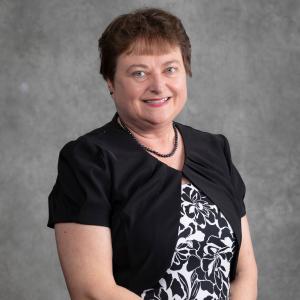
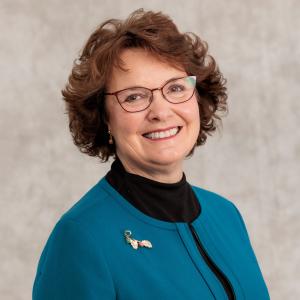
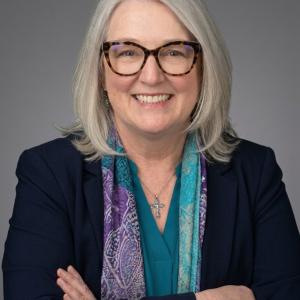
For more information about Alvernia’s Healthcare Science program contact the Admissions Office at 610-796-8269 or admissions@alvernia.edu. Or reach out directly to Healthcare Science Program Director Marcia J. Thompson, PT, DPT, DSc at 610-796-5610 or marcia.thompson@alvernia.edu.

Recent News
Alvernia adds four business leaders to Board of Trustees
Quartet with strong legacies of expertise, service and philanthropy join the university’s Board.

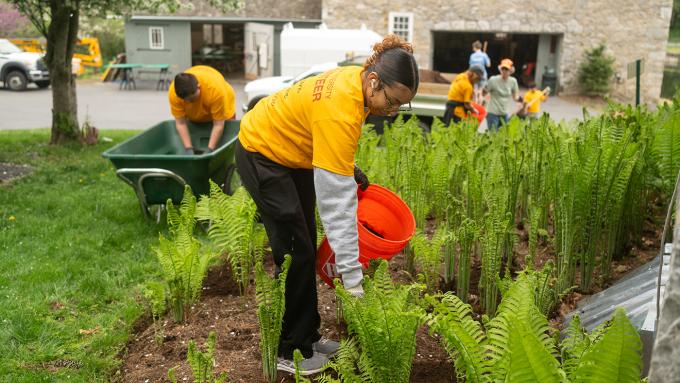
Alvernia holds annual Earth Day of Service, ramps up sustainability efforts
Students, leadership, faculty and staff help to beautify the area, part of the university’s continued push to advance sustainability.
Homecoming and Family Weekend mixes tried-and-true traditions with new offerings
A 5K race and a first-year family tailgate were among the events joining old favorites at the 2025 edition.