

Undergraduate Major
Bachelor of Science in Mathematics
Mathematics is one of Alvernia's highest paying and most sought after majors. Furthermore, math majors consistently score high on entrance exams for medical school and law school. Majoring in math will teach students critical thinking, and quantitative and analytical skills that are in high demand by employers.
Alvernia's class sizes are capped at 24 for lower-level courses and are typically much lower in upper-level courses. Though content-heavy, the major is credit-light. Students have the flexibility to pick up a minor or even a second major. Computer science and physics courses mesh particularly well with a math major. Prior math majors have double-majored in more distant subjects such as accounting and chemistry.
Experiential Learning
- All majors have the opportunity to present work done in their senior seminar at the annual HECBC conference.
- At least one math major has been awarded a SURF grant every summer since 2018.
- Some exceptional undergraduates have published papers in peer-reviewed journals with math professors.
- Students in the Honors Program can base their honors thesis on research conducted with our faculty.
Career Options
- Mathematician
- Statistician
- College Math Professor
- Actuary
- Market Research Analyst
- Economist
- Aerospace Engineer
- Financial Analyst
Fast-Growing Profession
Overall employment of mathematicians and statisticians is projected to grow 8 percent from 2024 to 2034, much faster than the average for all occupations, according to the Bureau of Labor Statistics. About 2,200 openings for mathematicians and statisticians are projected each year, on average, over the decade. Many of those openings are expected to result from the need to replace workers who transfer to different occupations or exit the labor force, such as to retire.
High Median Wage
The median annual wage for mathematicians was $121,680 in May 2024, according to the Bureau of Labor Statistics. The median annual wage for statisticians was $103,300 in May 2024.

Program Overview
- Application Instructions
Through a rolling admission process, prospective undergraduate students — including first-year, transfer, and international students — may apply via the Alvernia web portal or The Common Application. To learn more about how to complete your application, please visit our application page.
- Financing Your Education
There are options to assist in financing your education and making the tuition affordable. Visit our Student Financial Services page for a detailed overview of the process, including a link to complete the FAFSA application, as well as more information about tuition, the tuition payment plan and the tuition deferment program we offer. Alvernia’s Title IV code for the FAFSA is 003233. The Office of Student Financial Services is available to help with any questions you may have. Call 610-796-8201 or email sfs@alvernia.edu.
- Accreditation Statements
Alvernia is an accredited institution and a member of the Middle States Commission on Higher Education. MSCHE is an institutional accrediting agency recognized by the U.S. Secretary of Education and the Council for Higher Education Accreditation.
- Opportunities for Majors
Science Association
The object of this club is to afford an opportunity for the students of science to become better acquainted, to secure the intellectual stimulation that arises from professional association, to obtain experiences in preparing and presenting technical material before chemical audiences, to foster a professional spirit among the members, to instill a professional pride in the sciences, and to build an awareness of the responsibilities and challenges facing the modern scientist. Membership of this association is open to students pursuing their study in the area of science and related fields. Contact Rosemarie Chinni (610-568-1492, rosemarie.chinni@alvernia.edu) or Kevin Burns (kevin.burns@alvernia.edu, 610-790-2865) for more information.
Beta Kappa Chi
Beta Kappa Chi is the National Science Honor Society composed of chapters which seek to encourage and advance scientific education through original education, the dissemination of scientific knowledge and the stimulation of high scholarship in pure and applied science.
Epsilon Gamma Chapter of the Delta Epsilon Sigma Honor Society
This is a National Scholastic Honor Society for students, faculty, and alumni of colleges and universities with a Catholic tradition.
The Washington Center Experience
Alvernia students have an opportunity to earn college credit by spending a semester or summer in Washington, D.C. where they serve as interns in a congressional office, government agency, major corporation, newspaper or news network, or agencies devoted to legal affairs, international relations, or business and economics. They also may intern with one of several non-profit groups dealing with the environment, women’s issues, the arts, education, science, or labor relations among others. Participants are customarily juniors or seniors who have achieved grade point averages of 2.5 or better and who have the endorsement of the appropriate academic area. In addition to their internship, students select one seminar dealing with the arts and humanities, communication, public policy, the legal system, business, and government. Interested students should see their academic advisor.
Get to Know Your Faculty
For more information about Alvernia’s Mathematics program, contact the Admissions Office at 610-796-8269 or admissions@alvernia.edu. Or reach out directly to Mathematics and Technology Department Chair Matt Prudente at 610-796-8257 or matthew.prudente@alvernia.edu.

Michael Durant Ed.D. (c), MS, BS, CC
Paula Nowak OSF, MATM

Teri Price
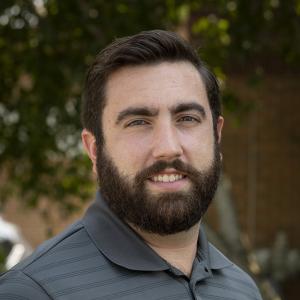
Matthew Prudente Ph.D.


Recent News
Innovative Alvernia program provides 'brain retain' to region
Apprenticeship to Degree allows students to work with employers for multiple years, positioning them for future success while retaining talent long term in the region.
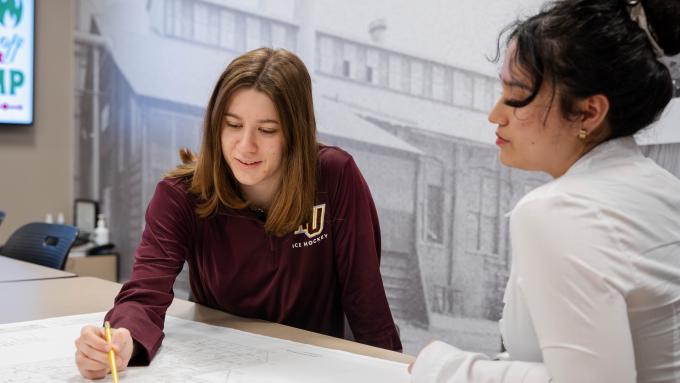
AI + AU: How Alvernia is incorporating the technology
Alvernia’s implementation of artificial intelligence aims to teach students to think critically about the technology while producing graduates prepared for the future of work.

Alvernia adds four business leaders to Board of Trustees
Quartet with strong legacies of expertise, service and philanthropy join the university’s Board.
