
Psychology professor believes fun activities are fair play
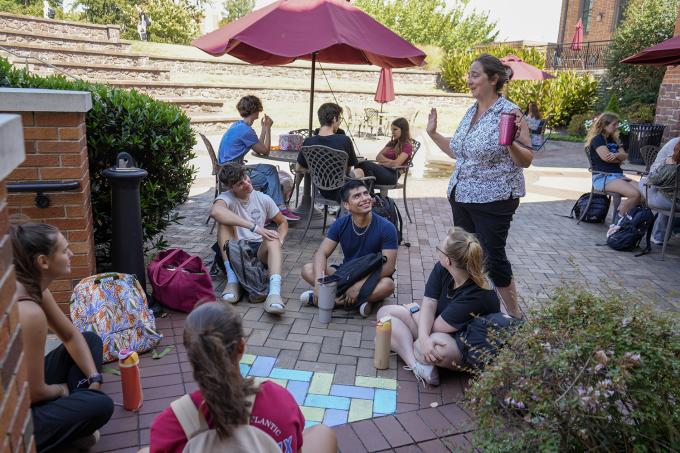
Erin Way, Ph.D.
Associate Professor of Psychology Erin Way has pretty much always been interested in gaining a better understanding of people – what makes them tick, so to speak. Especially children. Having a mother who was a kindergarten teacher certainly fueled that interest. And the psychology class she took in college lit a fire in her, too.
Her roles at Alvernia are perfect examples of putting her passions to work, something she hopes each of her students is able to do through their experiences at the university.
Way serves as coordinator of Alvernia’s S.U.R.F. (Student Undergraduate Research Fellows) program, which sees students and professors join together to conduct research.
“For me, the biggest component is the collaboration," Way explained. "This is not a faculty member telling you [the student] how to do something, like in this superior role. It’s that you’re working together. You’re both on relatively equal footing. You’re both approaching some new problem, some new question, that the faculty member does already have the answer to. In this experience, they are learning along with you. They’re working with you. And there is so much about the process of doing research that is so relevant to the rest of your life. You’re going to be approaching problems and trying to solve problems where there’s not a clear answer, where things are going to go wrong…and you have to pivot. I think all of those skills end up being so important and so critical for students as they move forward and go into careers or go to graduate school or wherever else they’re going to go when they finish.”
It sounds serious, and is, but there’s absolutely fun involved. Just as there is in a special course Way teaches: the Psychology of Play class.
The class, which fills up quickly each semester, came about when Way was teaching lifespan development and brought in some activities for students to do when the topic was preschool development.
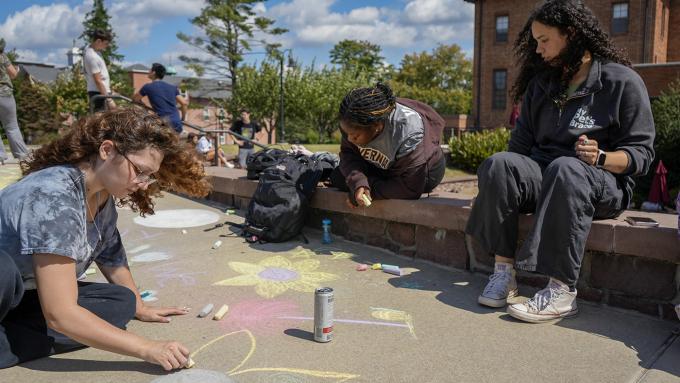
“I brought in some puppets and some games and crayons and things, and they didn’t know what to do," she remembered. "I was like, ‘Just play with them,’ and they didn’t know what I wanted them to do. So, I began to realize there is an expectation to stop playing when you get older, and that’s counter to what we know about how important play is and all of the benefits play gives us, not just as kids, but throughout our lives, so I really designed the course to kind of help students to recognize the connection between play and a lot of positive outcomes.”
Aside from teaching the class, Way credits her 8-year-old son for keeping her honest about making time for play at home.
“When I set aside that time to play with him, it’s really not just for him,” she admitted. “It’s for me, too. It makes me better in the other areas of my life, more productive. It’s important for me.”